
Most race-day gut problems are not "too many carbs." They are the wrong concentration in the wrong bottle size, mixed once at home and never rehearsed in heat.
This is the practical mixing guide for SEQ club athletes and coaches: scoop maths, common bottle sizes, when to dilute more in Queensland heat, and when a gel still earns a top-up. Write the numbers once. Make Saturday boring.
Why dilution beats guessing
Your gut sees grams of carbohydrate per litre, not the marketing claim on the tub. A full dual-carb serve in 500 ml tastes and hits differently than the same serve in 900 ml. Both can be "correct" for the hour if the plan matches how much you actually drink.
Lock three decisions before you open the scoop:
- Hourly carb target (g/h) for that session or race
- Bottle volume you will finish in that hour (ml)
- Sodium you want in the same fluid (not only sweetness)
Distance bands live elsewhere: sprint and Olympic carbs per hour, 70.3, and longer race articles on the Journal. This piece is the bottle itself.
The one-serve maths (copy this)
Many dual-carb drink mixes are built around one serve per bottle hour. HYDRAX CORE is one option at 85 g carbs / ~980 mg sodium per serve. That is the claims lock for every CORE mention on this site.
Useful dilution bands for that serve (adjust to your gut and sweat):
| Mix volume | Rough concentration feel | When athletes use it |
|---|---|---|
| ~500 to 600 ml | Stronger / denser | Cool races; high g/h with smaller bottles; trained gut |
| ~700 to 800 ml | Middle / race-common | Standard bike hours when you finish most of a bottle |
| ~900 to 1000 ml | More dilute | Heat; heavy sweater; gut wants volume with less "syrup" |
If your hourly carb target is lower than one full serve, do not invent a second product. Use a measured fraction of the same scoop, or split one serve across two smaller bottles, and write it down.
Example: you want ~60 g/h and one CORE serve is 85 g. Mix about two-thirds of a serve into the bottle volume you will finish that hour. Same flavour family. Same sodium logic. Less drama.
Bottle sizes athletes actually carry
Match the mix to hardware, not wishful thinking:
- 500 to 600 ml aero / road bottle: one denser hour if you empty it; common on short course
- 700 to 750 ml: the club default for many SEQ rides
- 800 to 1000 ml: better when heat asks for more fluid with the same carbs
- Soft flasks (run): smaller sips; often a lighter mix or the same product diluted further
Rule of thumb: plan the ml you will drink, then put the carbs into that volume. Do not put a full serve into a bottle you never finish, then wonder why the second hour went flat.
For brick sessions where the bike does most of the fueling work, see How to fuel a triathlon brick session.
Carry capacity is personal: concentrate the rear, water up front
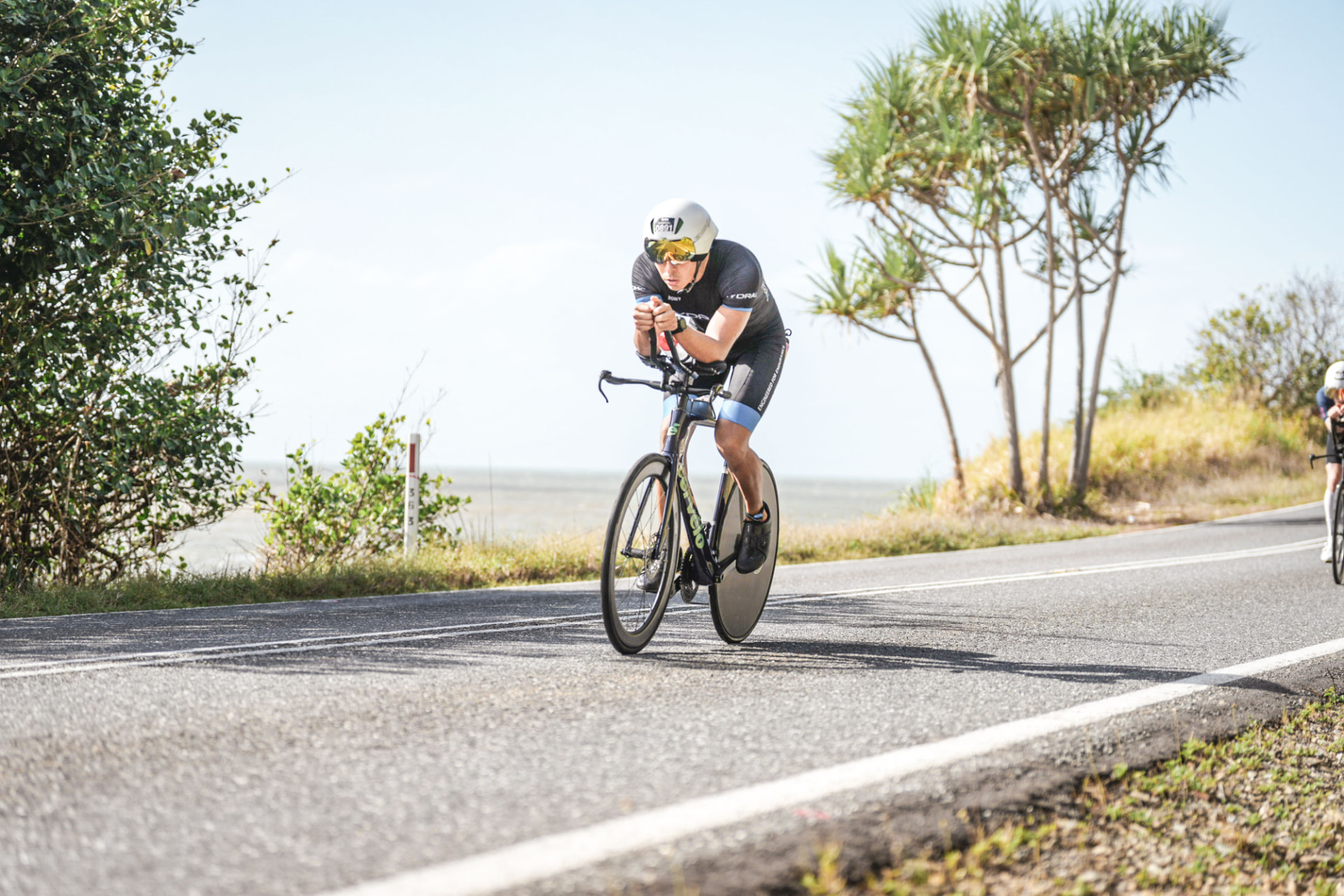
How much you can carry is personal. Frame, bottle mounts, pacing and course rules all decide it. A standard long-course setup is 3 to 4 bottles on the bike, with aid stations covering the rest.
A pattern that works over long hours: mix the ride's carbs concentrated in the rear bottles, and carry plain water up front. You sip the concentrate through the hour, then dilute with the water you collect on course.
Example: full-distance bike leg, about 5 hours at 100 g/h
- The ride's carbs mixed concentrated across two 1 L behind-the-seat bottles
- Front bottle is water only, changed at every aid station
- If speed allows, take a bottle at each station, and hold one to pour over your head and neck when conditions are hot
The same logic scales down for a 70.3: fewer hours, fewer bottles, same concentrate-then-water approach. At Olympic and sprint distance the race is short enough to carry the full amounts yourself, so you never depend on an aid station.
One catch: a concentrate bottle sits far above the dilution bands in the table above. That is fine, as long as the water you add on course is part of the plan, not an accident.
Heat: dilute for comfort, keep the hourly carbs
Queensland race weeks punish thick bottles. Sweat rate jumps. Thirst rises. A mix that felt fine in July can sit heavy in February.
In heat:
- Prefer the more dilute end of the table for the same hourly carb target (more water around the same carbs)
- Keep sodium in the bottle you are already drinking, not a separate panic stack mid-race
- Measure sweat once near race conditions (how to measure sweat rate) and use the Sweat Rate Estimator
- Rehearse the heat dilution on a long ride or brick before race week
Full heat protocol: Fueling long sessions in Queensland heat.
If last summer you "drank enough" but still cramped or faded, check whether the bottle carried real sodium with the carbs, not only flavour.
Bottle vs gel top-up
Bottle does the base work when the ride or race is long enough that you are already drinking, and you want carbs plus sodium in the same fluid.
Gel (or chew) tops up when you need a timed hit before a hard segment, the bottle is water-only for a short quality session, or bottles run low and you still need carbs.
Combine when the bottle carries most of the hourly grams, and one gel covers a known moment (pre-T2, late-bike surge, late-run). Do not run two unrelated sodium systems you have never trained.
Gut rehearsal still matters: Gut training for endurance fueling.
The bike is where nutrition happens
The bike leg is where a triathlon is fueled or broken. If you wait until the run to start taking carbs, it is too late: you are chasing a deficit your gut cannot close.
Your body is steady on the bike. You can absorb more per hour riding than running, which is why the bike carries the fueling load and the run carries the consequences.
And there is no nutrition during the swim, so the bike is your first real chance to load.
All of this is technical. It takes gut training and rehearsal to get right. The more you train your gut and work towards achievable targets, the better your absorption gets and the fresher you are for the run.
Coach checklist (paste into squad notes)
- Athlete has a written g/h target for the session or race
- Bottle size locked (ml) and matches what they actually finish
- Carry plan written down: which bottles carry concentrate, which carry water, and where aid stations land
- Scoop or fraction written on the bottle or in session notes
- Heat plan uses a more dilute mix of the same product, not a new stack
- Gel only as rehearsed top-up, not the whole plan
- At least two sessions completed at race dilution before key races
- No new flavours on the final race-week mix
- Athlete can say the mix in one sentence: "One CORE serve in 750 ml for the bike hour" (or their real numbers)
Send athletes the Fueling Strategy Engine once they know distance and sweat roughs, then make the bottle maths boring on Saturday.
Example mixes you can copy
Cool Olympic bike hour (~70 to 90 g/h target): one dual-carb serve in ~700 to 800 ml if you finish most of the bottle; optional gel only if already in the plan.
Hot long-ride hour (same carb target, more fluid): same serve in ~900 to 1000 ml; sip steadily; do not wait until thirsty.
Full-distance bike leg (~100 g/h for 5 hours): the ride's carbs concentrated across two 1 L behind-the-seat bottles, plain water up front changed at every aid station, and one in hand to pour over your head and neck in heat.
Short quality ride (lower carb need): measured fraction of the same serve, or water + a rehearsed gel. Keep the flavour family consistent with race week.
If you want one bottle that carries both carbs and sodium for those hours, HYDRAX CORE is 85 g carbs / ~980 mg sodium per serve. Adjust dilution after you know your sweat rate and gut response.
Make the bottle dull on purpose
Athletes who look organised at aid stations usually wrote the scoop and the ml down, practised that exact dilution more than once, and kept gels as top-ups. That is the whole game.
Write the mix. Drink it in training. Race what you rehearsed.
Soft next step: try HYDRAX CORE (85 g carbs / ~980 mg sodium per serve) at your race dilution, or sketch the session in the Fueling Strategy Engine after you know your sweat rate. Related: brick fueling, QLD heat, and sprint/Olympic carbs. Orders over $95 ship free within Australia.
Related reading
- How to fuel a triathlon brick session: carbs, fluid, timing
- Fueling long sessions in Queensland heat: carbs, fluid, sodium
- How many carbs per hour for sprint and Olympic triathlon
- How many carbs per hour for a 70.3
- Gut Training for Endurance Athletes
- How to Measure Your Sweat Rate (and Why Guessing Fails)