
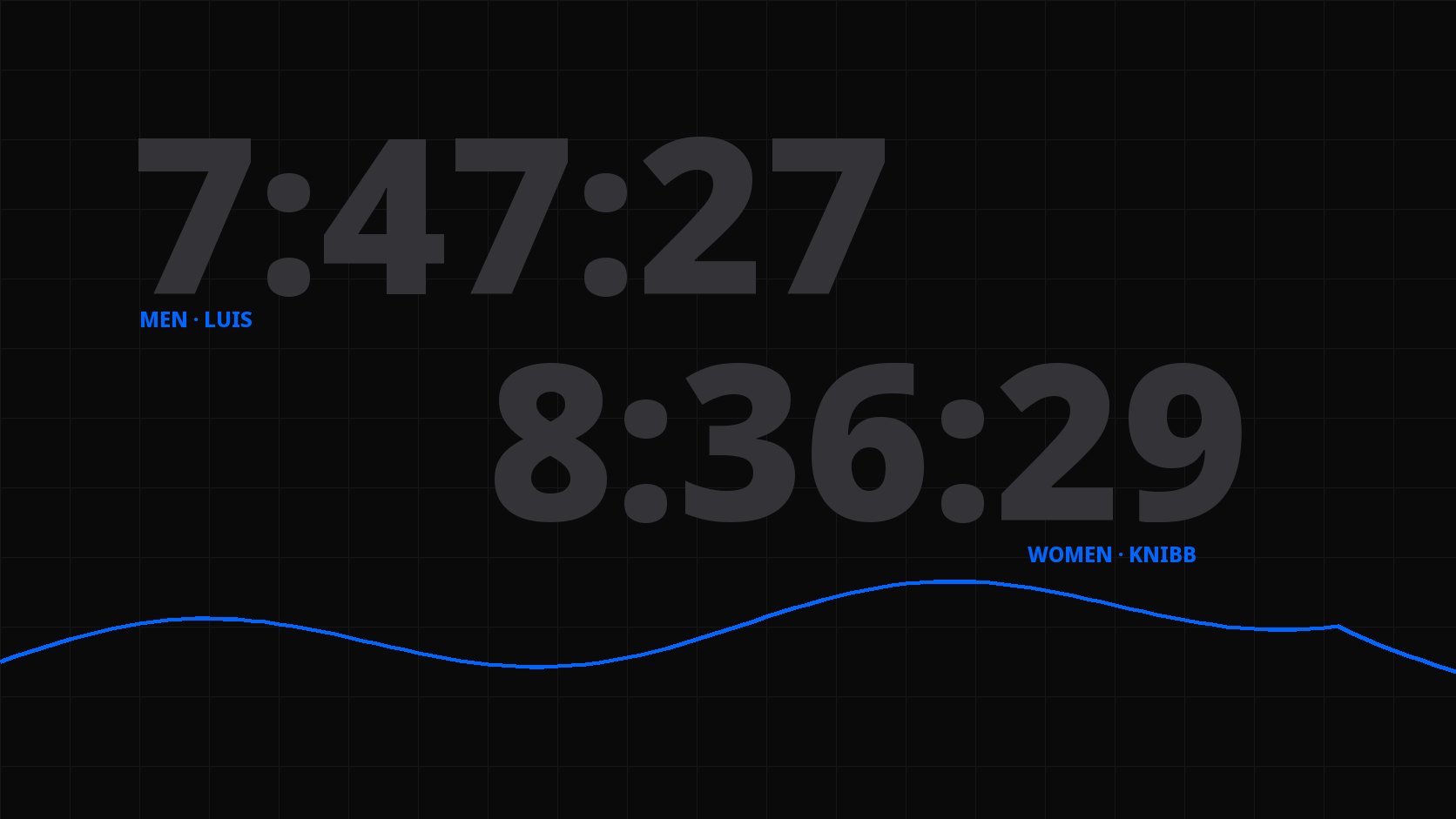
The 2026 IRONMAN World Championship was meant to be a coronation for somebody. Instead, the race on 10 October broke the script in both divisions. France's Vincent Luis won the men's title in 7:47:27 on his first Kona start. American Taylor Knibb won the women's race in 8:36:29 after retaking the lead with roughly seven tenths of a mile to run. Several of the biggest names never reached the line, and the defending women's champion, Solveig Løvseth, went from leading inside the final mile to finishing eighth.
It was also the first year since 2019 that men and women raced the same day on the Big Island, after the split-location era. Same course, same morning, and two very different races.
The men: a patient debutant beats the attackers
The swim gave little away. Triathlete reported that only 31 seconds covered the first 20 men out of a choppy Kailua Bay, with Gustav Iden and Magnus Ditlev the notable contenders outside that group (Triathlete).
The bike was where the day turned hard. Strong winds produced historically slow bike splits, well off the record-setting pattern of recent years. The climb to Hawi did the damage. Patrick Lange and Jamie Riddle stopped on the bike. Sam Laidlow came off the bike near the front but withdrew early on the run, saying afterwards he "never really felt myself on the bike" and was "30-40 watts off" his plan.
Ditlev, by contrast, used the Hawi climb to move through the field and took the lead after the turnaround. He reached T2 in front with the fastest bike split of the day, 4:06:47, and opened the marathon strongly.
Luis did not chase that. He ran alongside Kristian Blummenfelt, slowly taking time back. With about seven miles left he went alone. Just before mile 20 Ditlev began to stop and stagger on the Queen K, and Luis passed him with fewer than five miles remaining. Iden, carrying a three-minute drafting penalty served on the bike, closed late but faded inside the last two miles. Luis won by 1:35 from Iden, with American Matthew Marquardt third.
The lesson in that sequence is not that attacking is wrong. It is that on a slow, windy day the cost of every surge is paid later, and the athlete who protected his marathon was the one still running at mile 24.
The women: a reversal on Palani Road
Lucy Charles-Barclay led out of the water as expected. Knibb took the front on the bike around mile 30 and, after a long back-and-forth, built a lead of about three minutes into T2 (Triathlete). Charles-Barclay faded early in the marathon and later withdrew.
Løvseth ran the race she had won with a year earlier. She closed a deficit of more than four minutes and took the lead with about five miles to go (USA Triathlon). Knibb was struggling too. NBC Sports reported she walked an aid station and vomited, and that her manager held up a whiteboard reading "vomiting is normal" (NBC Sports).
Then, less than a mile from the finish, Løvseth began to wobble and went down. Knibb passed her and won. Løvseth got back up after several minutes and walked to the line, high-fiving spectators, to finish eighth. To be clear: that was a finish, not a DNF.
Behind them, Laura Philipp produced the fastest women's marathon to take second, and Julie Derron finished third on debut.
What we know, and what we do not
It is tempting to explain every collapse. We will not. None of the sources above give a medical cause for Løvseth's late distress, Ditlev's slowing, or the individual withdrawals, and guessing would be unfair to the athletes. What is documented is the conditions (wind on the bike, a hot and humid island), the race positions, and what athletes said themselves.
Knibb's own explanation is the most useful line of the day. "When I entered the Energy Lab I made a decision to take care of myself," she said. "When Solveig passed me, I thought, I can't fight. If I fight, I lose. Just get to the finish line."
Hard-won lessons for age groupers
These are general lessons drawn from how the race unfolded, not diagnoses of what happened to any individual.
- Pace the bike for the run you want. The men's winner was the athlete who did not spend his marathon on the Hawi climb. Set a power or effort ceiling for climbs and headwinds and hold it.
- Treat heat as a training block, not a race-week surprise. Heat acclimation takes repeated exposure over days to weeks. Arrive adapted, and adjust targets on the day when it is hotter or windier than planned.
- Drink to a plan built on your sweat rate. Fluid and sodium needs vary widely between athletes. Measure your sweat rate in conditions like your race, then practise a plan that avoids both large deficits and overdrinking.
- Fuel early and consistently on the bike. The bike is where carbohydrate is easiest to absorb. Starting the marathon underfuelled leaves little room to recover. Use a target you have trained your gut to handle. Our guide to carbs per hour for an Ironman covers the ranges.
- Have a plan for the bad patch. Both winners went through it. Knibb walked, reset, and kept moving. A rehearsed fallback (slow down, take fluid and carbohydrate you know, keep walking forward) beats improvising when you are cooked.
- Do not overreach because the leaders are in sight. Several of the day's hardest moments came after big moves. Patience was not passive in Kona this year. It won both races.
Plan your own race
If Kona is on your horizon, start with how to qualify for Kona and what Kona really costs from Australia. Then build an hour-by-hour plan with the free race fuel plan builder, or browse the fuelling plans for Australian races. For the numbers behind how hard this course is, read How hard is Kona, really?.
Sources
- Triathlete, 2026 Ironman World Championship updates and results: https://www.triathlete.com/culture/news/2026-ironman-world-championship-kona-results/
- USA Triathlon, Taylor Knibb claims first IRONMAN World Championship title: https://www.usatriathlon.org/news/2026/october/11/taylor-knibb-claims-first-ironman-world-championship-title-in-dramatic-kona-finish
- NBC Sports, Ironman Kona results 2026: https://www.nbcsports.com/olympics/news/ironman-kona-2026-world-championship-taylor-knibb-vincent-luis
- TRI247, IRONMAN World Championship 2026 women's full finishing order: https://www.tri247.com/triathlon-news/elite/ironman-world-championship-kona-2026-full-finishing-order-women
- IRONMAN, Knibb and Luis strike late in Kona: https://www.ironman.com/stories/pro-elite/knibb-and-luis-strike-late-kona
Important information
Results and times reflect reports published on 11 and 12 October 2026 and may be revised when official results are finalised. This article is general information, not medical advice. HYDRAX is not affiliated with IRONMAN.
Quick answers
Who won Kona 2026?
Vincent Luis of France won the men's IRONMAN World Championship in 7:47:27 on his Kona debut. Taylor Knibb of the USA won the women's race in 8:36:29.
Did Solveig Løvseth DNF at Kona 2026?
No. Løvseth led inside the final mile, went down less than a mile from the finish, then got up and walked in to finish eighth.
Which pros did not finish Kona 2026?
Reports from Triathlete and TRI247 list Patrick Lange and Jamie Riddle stopping on the bike, Sam Laidlow withdrawing early on the run, and Lucy Charles-Barclay withdrawing during the marathon. Official results may revise these details.
Why were bike times slow at Kona 2026?
Triathlete reported very windy conditions, with headwinds on the climb to Hawi, producing historically slow bike splits compared with recent editions.