
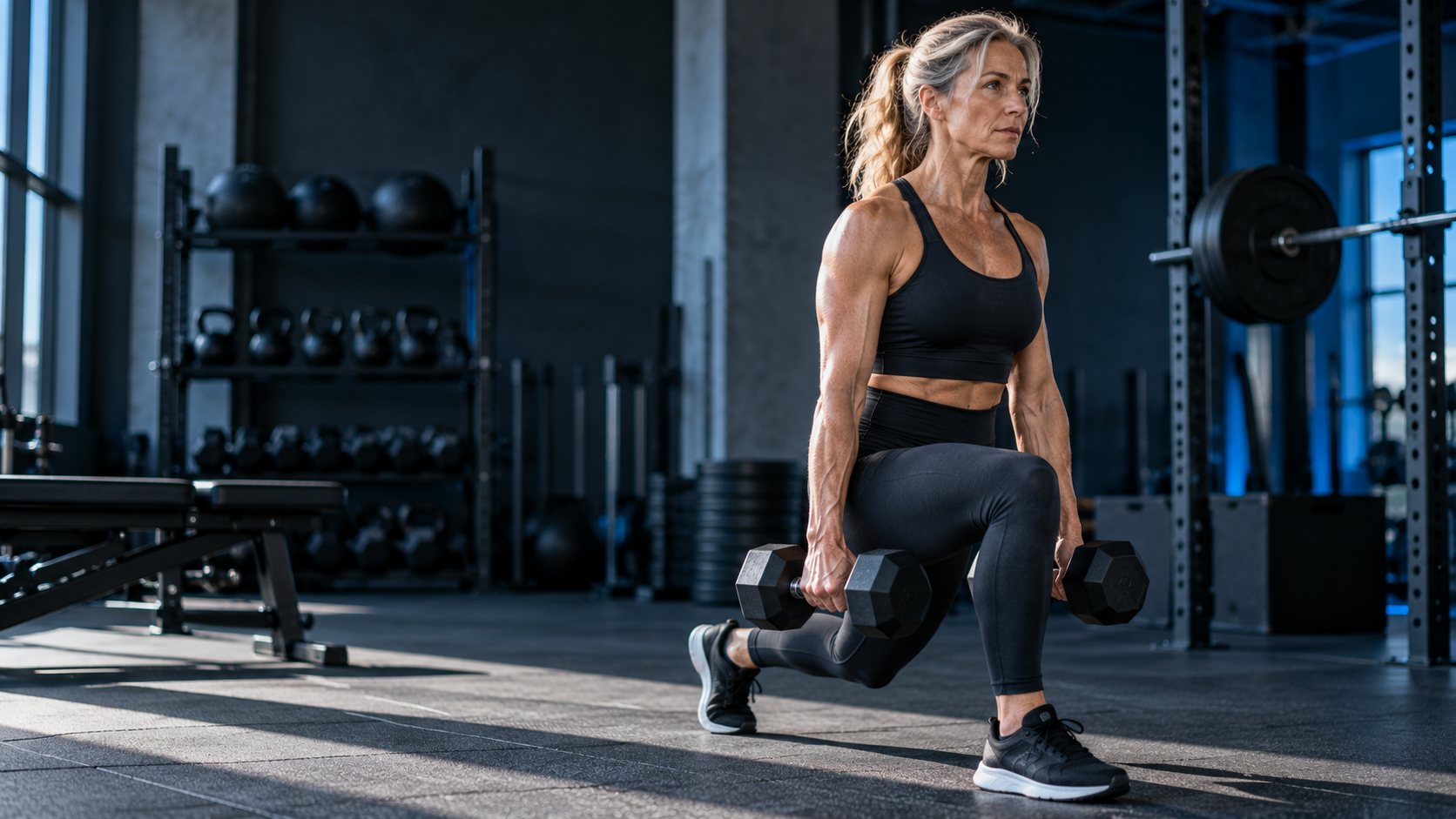
You are training consistently, but strength feels easier to lose than it used to. Recovery takes longer. A poor night of sleep affects the whole next day. You walk into a room and forget why, or lose the word you were about to say.
Then your feed tells you creatine fixes menopause.
That claim runs ahead of the evidence. But underneath the hype is a more useful finding: creatine is one of the most studied sports-nutrition compounds, and its strongest menopause-related case is supporting strength and lean mass when combined with resistance training.
It is not a hormone treatment. It has not been shown to treat hot flushes, night sweats or menopause itself. The question is whether it can support parts of health and performance that become harder to maintain through this stage of life.
Answer first
- Strength and lean mass: promising, particularly when creatine is combined with resistance training.
- Bone mineral density: not proven. Longer trials have produced mixed or negative results.
- Brain fog and cognition: scientifically interesting, but direct menopause research is still small and preliminary.
- Sleep and mood: not established as menopause benefits.
- Perimenopause: much less studied than postmenopause.
That distinction matters. Creatine may be a useful training supplement during menopause. It should not be sold as a menopause remedy.
Why this life stage changes the conversation
Menopause is the point reached after 12 consecutive months without a menstrual period. Perimenopause is the transition leading to it, when hormone levels fluctuate and symptoms can begin.
The experience is not identical for every woman. Commonly reported changes include sleep disruption, altered body composition, reduced recovery, concentration difficulties and changes in training tolerance. Ageing also brings a gradual loss of muscle mass and strength, while the menopause transition can make maintaining both more important.
This is where creatine becomes relevant. Creatine helps replenish phosphocreatine, an energy reserve used to regenerate ATP during short, high-output work. In practical terms, that includes lifting, accelerating, climbing, sprinting and repeating hard efforts.
The supplement does not build strength while you remain inactive. Its value is largely in helping support the training stimulus.
The strongest evidence: creatine plus resistance training
A 2026 systematic review and meta-analysis pooled seven randomised trials involving 608 postmenopausal women. Across the studies, creatine produced a small additional increase in lean mass, averaging about 0.37 kg. Strength also improved, with the clearest results generally appearing when at least 5 g per day was paired with resistance training.
That is not a dramatic transformation. It is still potentially meaningful.
The real-world “aha” is this: creatine is not replacing the work. It may help women obtain slightly more adaptation from work they are already doing.
If you have noticed that weights which once felt comfortable now feel unexpectedly heavy, or that maintaining strength requires more deliberate effort than it did a decade ago, the first intervention is a progressive resistance-training program. Creatine may be an evidence-supported addition to that foundation.
What about bone health?
This is where online claims often become too confident.
In a large two-year trial, 237 postmenopausal women completed resistance training and walking while taking either creatine or placebo. Creatine did not produce an additional improvement in bone mineral density at the femoral neck, total hip or lumbar spine.
Researchers did observe improvements in several measures of bone geometry at the proximal femur. Those findings are interesting, but they are not the same as demonstrating that creatine prevents osteoporosis or fractures.
An earlier, smaller 12-month study found that creatine attenuated femoral-neck bone loss when combined with resistance training. When the evidence is considered together, the honest conclusion is that creatine's effect on bone remains uncertain.
Resistance and impact exercise, adequate nutrition, clinical risk assessment and appropriate medical care remain the centre of bone-health management.
Can creatine help brain fog?
Possibly, but this is not yet a settled benefit.
The brain also uses the creatine-phosphocreatine system to help manage energy demand. That gives researchers a credible biological reason to investigate creatine during periods of disrupted sleep, hormonal change or elevated cognitive demand.
One small eight-week randomised trial involving 36 perimenopausal and menopausal women reported improvements in selected cognitive measures and brain-creatine concentrations. However, it tested low doses of creatine hydrochloride and creatine ethyl ester, not the creatine monohydrate used in HYDRAX CREATINE.
The sample was small, the study was short, and its findings cannot be transferred directly to every creatine product.
An Australian study is now examining creatine and subjective cognitive decline in postmenopausal women. Until larger, independent trials report, “may support cognition” belongs in the research discussion, not on a promise that creatine will fix brain fog.
What creatine does not do
Creatine has not been established as a treatment for:
- menopause or perimenopause
- hot flushes or night sweats
- depression or anxiety
- osteoporosis
- sleep disorders
- memory impairment or dementia
- hormonal imbalance
If symptoms are new, severe or disrupting daily life, they deserve proper clinical assessment. A supplement should not delay evidence-based menopause care.
What form has the strongest evidence?
Creatine monohydrate has the deepest research base. More novel versions are often marketed using claims about superior absorption or reduced bloating, but they do not have the same volume of long-term evidence.
Women do not need a pink container, a hormone blend or a “female creatine” formulation. The molecule is not gendered.
The practical things to compare are:
- the amount of creatine per serve
- the total grams in the pack
- ingredient transparency
- product quality and testing
- cost per gram, not the advertised number of scoops
A practical approach
HYDRAX CREATINE provides 5 g of creatine monohydrate per labelled serve. Loading is optional. Consistent daily use is more important than whether it is taken before or after training.
Some people notice a small increase in scale weight after starting creatine because more water is stored inside muscle. That is not automatically fat gain. Starting without a loading phase makes the change more gradual and may be easier on the stomach.
Follow the product directions. Speak with a doctor or Accredited Practising Dietitian before use if you have a medical condition, take relevant medication, are undergoing investigation for symptoms, or are unsure whether the product suits you.
The useful conclusion
Creatine does not “solve menopause.” That is marketing language, not a scientific conclusion.
The stronger proposition is also the more credible one: during a stage when preserving strength, training capacity and lean mass becomes increasingly valuable, creatine monohydrate may help women obtain more from consistent resistance training.
The gym remains the signal. Creatine may help support the response.
HYDRAX CREATINE: 5 g creatine monohydrate per serve, one ingredient, 60 serves. View HYDRAX CREATINE.
Research referenced
- Naddafha S, Antonio J, Kreider RB, Stout JR. Creatine monohydrate for lean mass, strength, and bone density in postmenopausal women: a systematic review and meta-analysis. Journal of the International Society of Sports Nutrition. 2026. https://pubmed.ncbi.nlm.nih.gov/42141930/
- Chilibeck PD, et al. A 2-yr Randomized Controlled Trial on Creatine Supplementation during Exercise for Postmenopausal Bone Health. Medicine & Science in Sports & Exercise. 2023. https://pubmed.ncbi.nlm.nih.gov/37144634/
- Chilibeck PD, et al. Effects of Creatine and Resistance Training on Bone Health in Postmenopausal Women. Medicine & Science in Sports & Exercise. 2015. https://pubmed.ncbi.nlm.nih.gov/25386713/
- Smith-Ryan AE, et al. Creatine in women's health: bridging the gap from menstruation through pregnancy to menopause. Journal of the International Society of Sports Nutrition. 2025. https://pubmed.ncbi.nlm.nih.gov/40371844/
- Korovljev D, et al. The Effects of 8-Week Creatine Hydrochloride and Creatine Ethyl Ester Supplementation on Cognition, Clinical Outcomes, and Brain Creatine Levels in Perimenopausal and Menopausal Women. 2025. https://pubmed.ncbi.nlm.nih.gov/40854087/
Important information
This article provides general educational information and is not medical advice. It does not diagnose, prevent or treat menopause, perimenopause or any medical condition. HYDRAX CREATINE is a Formulated Supplementary Sports Food under FSANZ Standard 2.9.4 and should be used with an appropriate physical training or exercise program. Not suitable for children under 15 years of age or pregnant women. It should only be used under medical or dietetic supervision. Always follow the label.
Quick answers
Does creatine help with menopause?
Creatine is not a menopause treatment. Its strongest menopause-related evidence is a small extra gain in lean mass and strength in postmenopausal women when at least 5 g a day is combined with resistance training.
Does creatine improve bone density after menopause?
Not proven. A two-year trial in 237 postmenopausal women found no extra improvement in bone mineral density at the hip or spine with creatine, although some measures of bone geometry improved.
Can creatine help menopause brain fog?
Possibly, but it is not settled. One small eight-week trial in 36 women reported improvements in some cognitive measures, but it used creatine hydrochloride and creatine ethyl ester at low doses, not creatine monohydrate.
Does creatine help hot flushes or night sweats?
No. Creatine has not been shown to treat hot flushes, night sweats, sleep problems, mood or menopause itself.
What type of creatine has the most evidence?
Creatine monohydrate has the deepest research base. Women do not need a special female formula; compare grams per serve, total grams, ingredients and cost per gram.